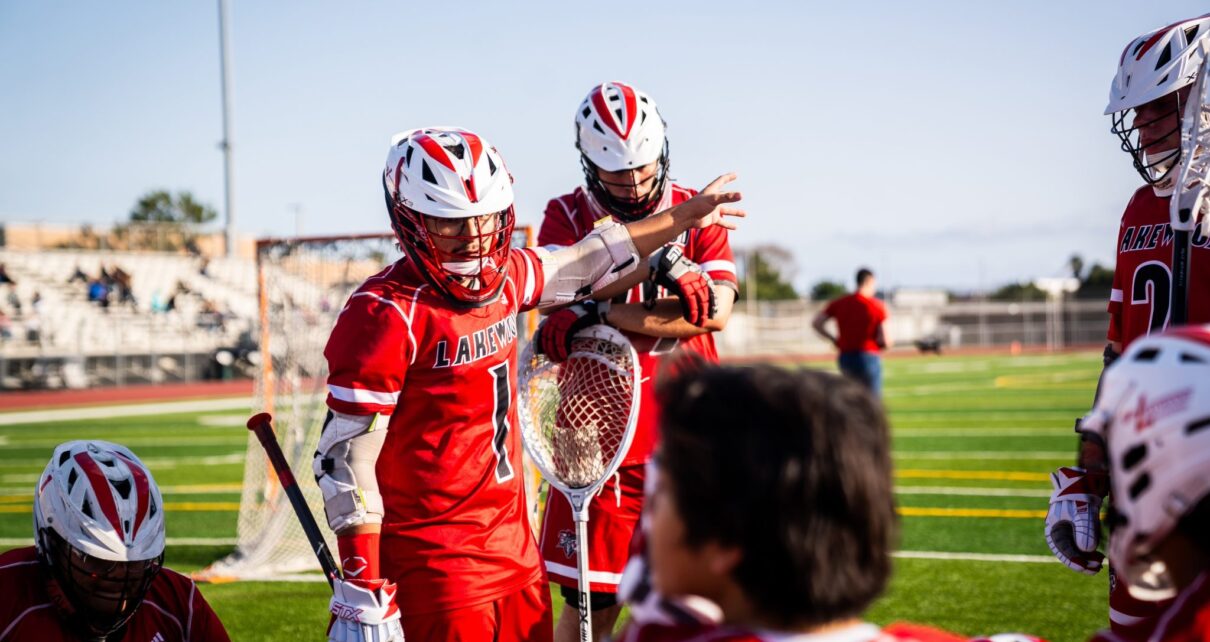
Lakewood High has discontinued both its boys and girls lacrosse programs after failing to find qualified head coaches, a decision that reflects broader challenges facing a sport that was once one of California’s fastest-growing competitions.
The move comes as reigning Moore League boys co-champion Millikan and defending girls champion Wilson continue searching for head coaches, leaving two of the league’s four reigning champions without leadership. Long Beach Poly recently hired a coach for its boys program but remains in search of a girls coach.
For Lakewood athletic director Mike Wadley, the decision was not about student interest in lacrosse. It was about whether the school could responsibly operate a program without the proper leadership.
“The kids are great,” Wadley said. “We’ve never been able to have more than one team, but the bigger issue was finding someone qualified to coach them.”
Lakewood posted the coaching position but received few viable applicants. The difficulty finding a coach exposed a larger challenge for lacrosse programs outside the sport’s traditional hotbeds.
“Lacrosse is a dying sport in our area,” Wadley said. “In some parts of the Southern Section, it’s doing really well. In our area, it isn’t.”
The issue extends beyond Lakewood.
Millikan is searching for a boys coach after sharing this year’s Moore League championship, while Wilson is looking for a replacement after winning another league title. Those vacancies highlight the difficulty schools face when trying to recruit qualified coaches in areas where lacrosse does not have the same established pipeline as sports such as football, baseball or soccer.
Jared Weckerly departed Millikan at the end of the season after accepting an assistant coaching position at Long Beach State.
“We knew Millikan was looking,” Wadley said. “Wilson was looking, too. Other athletic directors have been dealing with the same thing.”
Lakewood’s decision also comes as the school continues dealing with declining enrollment and district staffing reductions. Wadley said those challenges made it more difficult to dedicate staffing resources to a program without coaching stability.
“We don’t have the teacher of record. We don’t have the FTE (full-time equivalent) for it,” Wadley said. “We’ve lost almost 60 teachers through displacement or attrition over the last five years. That’s the reality we’re dealing with.”
Wadley said declining enrollment has affected decisions across the campus.
“We’ve been trying to explain that we’re losing students while other schools continue to grow,” he said. “Those staffing decisions affect every program on campus.”
For Keith Parkman, coach of the boys team at Compton High, the coaching shortage is tied to the sport’s geographic concentration.
“I think it’s definitely hard because the lacrosse community is concentrated in places like the South Bay, the Westside, South Orange County and San Diego,” Parkman said. “Finding a coach willing to drive to Long Beach is difficult.”
Unlike sports with decades of local tradition, lacrosse still lacks a deep coaching pipeline in many public school districts.
“Some people would rather be an assistant than take on the responsibility of being a head coach,” Parkman said. “A lot of it comes down to how dedicated people are to growing the game.”
Compton has largely avoided some of those challenges through Harlem Lacrosse, a national nonprofit that provides academic support and athletic programming while helping create a pipeline of players into the high school program.
“Programs like Harlem Lacrosse are trying to grow the game in communities that traditionally haven’t had access to it,” Parkman said.
Parkman also credited Beach Cities Lacrosse for helping introduce more Long Beach area athletes to the sport, saying local club programs remain critical to building future high school participation.
The challenge for the Moore League is that competitive success has not translated into coaching stability. Millikan captured a share of the boys championship this season, while Wilson remained one of the area’s top girls programs. Yet both are now facing the same issue as Lakewood: finding qualified people to lead those teams.
For Wadley, growth has not reached schools like Lakewood.
“In some areas, lacrosse is thriving,” he said. “Here, we’ve struggled to build numbers and find coaches. At some point, you have to ask whether you’re doing right by the students if you can’t provide the experience they deserve.”